

Profile
Blog
Photos
Videos

- Blog
- Asia
- China
-
Location Date Thu, 27 June 2013 1372345603 Fri, 29 March 2013 1364545769 Sun, 24 February 2013 1361691924 Mon, 11 February 2013 1360579714 Thu, 27 December 2012 1356578643 Sun, 16 December 2012 1355657875 Sun, 02 December 2012 1354454283 Tue, 20 November 2012 1353402115 Mon, 12 November 2012 1352723117 Fri, 02 November 2012 1351838260 Sat, 20 October 2012 
1350743981 Mon, 15 October 2012 1350307829 Fri, 12 October 2012 1350029352 Wed, 03 October 2012 1349262227 Thu, 06 September 2012 1346936553 Mon, 27 August 2012 1346076011 Mon, 20 August 2012 1345433780 Sat, 18 August 2012 1345286756 Sun, 05 August 2012 1344164811 Thu, 02 August 2012 1343870843 Mon, 30 July 2012 1343628093


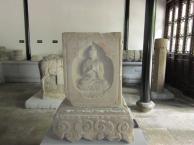
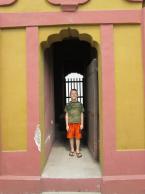
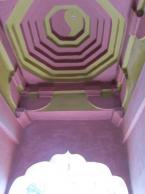
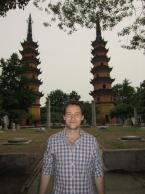
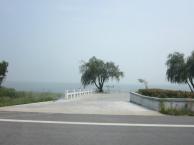
We got to another of the Unesco World Heritage Gardens recently, this one titled the Canglang Ting or Surging Wave Pavilion. Just off the ultra modern Renmin Road a quiet street led down the side of a canal to a bridge arching into a walled compound. The Surging Wave Pavilion was built in 1044 C.E. by the Song Dynasty poet Su Shunqing (1008-1048) as a symbolic and sardonic commentary on his removal from government office. It was constructed on the site of an older imperial flower garden, and as the oldest of the existing gardens in Suzhou it is remarkable for the fact that it retains its Song Dynasty layout. The name of the garden served as Su's vehicle for remarking on his forced retirement, as it comes from a poem titled Fishermen by Qu Yuan (340 B.C.E.-278 B.C.E.!!) in which the poet, speaking during the Warring States Period, stated "If the Canglang river is dirty, I wash my muddy feet; if the Canglang River is clean, I was my ribbon." This verse is an allusion to the kind of honest official who rather than compromising his integrity removes himself from politics. With this in mind one can see why Su chose to name his garden after the earlier poet's works. After Su's death the garden passed through many hands and ultimately became the property of a series of governors of Jiangsu Province.
The poem the Fishermen is a staple of the Chinese literary tradition, as it appears in many forms and venues, including in Mencius. Another version has Confucius interacting with the fisherman. All of these parables retain the basic confrontation of a scholar and a fisherman, and the version attributed to Qu comes from a book called "Songs of the South".
The pavilion itself is fascinating, and it has been enlightening to experience these many classical gardens in Suzhou as the benefit of such exposure becomes more apparent the more of them we venture into: small details and aesthetic nuances differentiate what at first seemed very similar. The Surging Wave Pavilion has a general flow like nothing more than an actual wave, as the visitor is immediately greeted upon entering by a whale-long fin of land curling through the center of the largest green space, about ten to fifteen feet high, covered in plants, trees, and rockery, twisting between the varied buildings and gazibos, undulating like a wave. Another wonderful feature of the place was the "Room of Five Hundred Sages", in which the stone engraved portraits of, you guessed it, 500 sages hang row by row. If only I could get a list of them all! That would be cool. Also cool are the many varieties of bamboo that grow in the place. Encircling much of the garden are slender walkways covered with stone tiles, looking through a wall onto the canal outside.
The photos in the new album will convey whatever is lost by these words.
- comments