

Profile
Blog
Photos
Videos

- Blog
-
Location Date Victoria 1371250800 South Australia 1370041200 Fiji 
1368486000 -
Location Date Tue, 14 May 2013 1368517384 Mon, 13 May 2013 1368431648 Sun, 12 May 2013
1368327958 Sat, 11 May 2013 1368259083

The first official week on camp began, but really it was my second week in Fiji. Since we had now settled in to life on camp, our leaders got us stuck into the project work. The GreenForce guys began more intense dive training so they could qualify as soon as possible; plus they started having fish lectures and learning the butterfly and angelfish for identification. MedForce began the ATLS course.
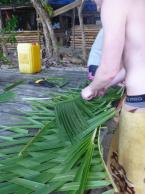
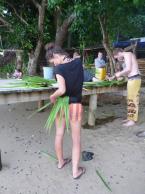
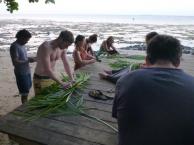
As mentioned, this was an Advanced Trauma Life Support course that the camp doctor could teach and is basically a step beyond the DRABC approach to basic life support taught in a first aid course. Instead we covered DRcABCDE/2/Package + Evac - a way of treating emergency trauma cases in a wilderness setting. Beginning the same as BLS with danger then response, we also covered the 'call for help' in more detail; on camp this would be to alert our camp leader, Chad, to call for a helicopter from the mainland and tell them the seriousness of the injury. Then we were taught that first, before anything else, we must make sure the c-spine is stabilised even when there is only the slightest suspicion of a neck injury. Moving swiftly into ABC, we covered various methods of keeping an airway open using airway adjuncts, moving through reasons why someone may not be breathing and why they might have a poor circulation. Then we covered D - disability, other conditions that could be causing a serious problem such as epilepsy or a head injury. E -Environment/Exposure, this was to check for a way of keeping the patient safe while being treated e.g. keeping them out of the sun. 2 (the secondary survey) is checking the head, chest, abdomen, pelvis, long bones and skin for other signs of injury that may need addressing before evacuation. Then we learnt how we could package the body using things from our surroundings so the patient could be evacuated safely. This included making head and neck braces, splinting and making spinal boards.
It was fascinating to learn life support in so much more detail. We covered most of the course in the second week as lectures. The medical students on their electives also did some basic anatomy, pulses and chest and abdo exams with us as an aid to the life support we were learning. Alongside the ATLS, the camp doctor ran lectures in the evenings covering areas of expedition medicine such as dive, arctic and tropical. The learning was fun and relaxed and the setting really helped me understand the need for a doctor that can think outside the box to treat patients in the remotest of areas as well as being able to handle the responsibility for a large group of people in difficult environments.
In between lectures, we cracked on with our PADI training. I didn't realise how much bookwork would be involved; we had 12 hours to cover the first chapter and do the quiz at the end on the first day. We had to watch these cheesy videos that were word-for-word the chapter we had just covered. We finished all the book work first before any diving to get it out the way and unfortunately our air compressor broke a few days in to the phase so no-one could go diving anyway.
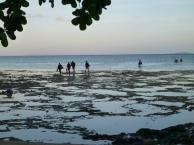
This was a bit of a set back, but with more time on our hands we took advantage of our environment and on the Wednesday, we all went for a walk around the coast of the island to a place called the spit. This section of beach is uncovered at low tide about 100m off shore from the west of the island. It was a 40-minute walk from camp, but worth the walk wading through mangrove and mud and sand. It was a struggle for me at times as the water occasionally came up over my knees and I could barely see were I placed my feet from all the silt that had been kicked up before me. We got their early afternoon and took obligatory group shots of GreenForce, MedForce and everybody standing on the beach. The views were stunning and it felt like we were the only people in the world and wondered what people would think if they could see us from an airplane. Then after some book reading, sun bathing and snorkeling we headed back to camp before the tide came in again.
MedForce also took a walk up the hill at the back of camp on the Thursday so we could see the view of the outer reef so much more clearly. The Fijian, Kai, who lived on camp with us most of the time, had to machete his way up through the jungle to make a pathway for us. We had to climb our way up it was so steep and we almost all slid back down on our bums!
Most importantly during the week we followed our chore rota. Each day on camp could only run smoothly if we each did our part, be it cooking meals, cleaning the toilets or raking the leaves up around camp. We also had one person make a loaf of bread everyday and two people build a fire in the outside oven and cook it. This became the bain of your day if this was your chore because finding enough dry firewood, getting the fire lit and keeping it alight as well as cooking such a large loaf of bread became near impossible to complete easily and took up half the day. Thankfully I only had to actually do this once during my stay on camp. Most of my time seemed to be spent in the kitchen on lunch or dinner, which wasn't always easy either. We all found it difficult to gauge how much of each ingredient to use for the meal especially with limited ingredients to work with; it was certainly a creative and interesting chore to do. Our diet consisted mainly of aubergines, carrots, rice, potatoes, kidney beans, tinned tomatoes and lots and lots of curry powder. However I enjoyed the challenge of cooking and it as a great way to spend time with other volunteers, not that there wasn't a case of too many cooks spoil the broth at times but it all gave us an opportunity to lead or be led.
Sunday soon came around and we were off for another village visit. This time we visited a village much further round the coast. We had to go in two separate boats again but there was a slow boat and a fast boat. I ended up in the fast boat and we shot off across the sea and reached our destination about 20 minutes before the other group. Having thought the ride exhilarating and pretty awesome, we were disappointed when the other group arrived with shouts of 'We've just seen dolphins!'
We all stayed together in this one family's house before church, relaxing and getting to know the villagers. We only had families at our local village, so this was a chance to interact as a group with the community. We had church again and as it was the same denomination, Methodist, the service ran pretty much the same as our village. We came back to the house for lunch and spread out on mats inside and out with platefuls of delicious food. It was a hot day and with little breeze blowing through the village, we all struggled with the heat. Some slept it off and some of us found some shade outside.
We then had afternoon tea of cake, crackers and pancakes before some of the volunteers began interacting with the children who were very shy around us but also intrigued: who were these strange white people in their homes and church clothes? We had also been nervous about interacting with them as we did not want to get something wrong culturally and for many of us it was the first time we had spent any length of time with people from a developing country. Both the children and we soon came out of our shells and we all got stuck in to playing hand-clapping games and other childhood games. The children had boundless energy and enthusiasm and every moment seemed to be photo worthy. They were intrigued by all the different cameras and were soon posing left, right, and centre for all the volunteers. It was a wonderful afternoon lazing around outside in the sunshine and watching the children have so much fun. It was sad when we said goodbye and the children clung to our arms and waved us off from the beach.
And so came the end of our second week. It seemed impossible that in between trips out, lectures and meal times we had had any time to do our washing, our chores or read a book but time didn't hold the same meaning on camp. Although we had a schedule to follow each day, time wore on slowly each day and it seemed like we had so much time left to enjoy life on camp.
- comments