

Profile
Blog
Photos
Videos

First blog post
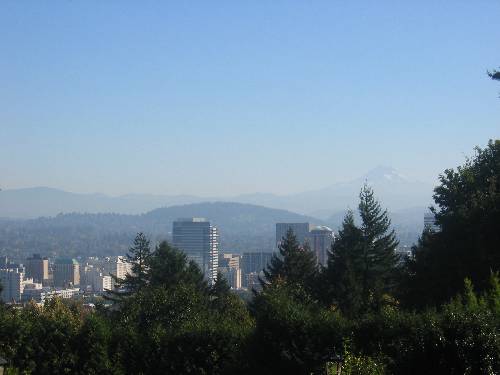
North Portland, Oregon
My international experiences to date have been primarily for tourism. In 2008, I went to Ireland to join my Aunt and Uncle who had sailed across the Atlantic, and we spent the majority of our time there sailing the West Coast of Ireland around Kilrush and Kilkee. We also took day trips around the coastal areas, but I never made it to a large city such as Dublin. The past few summers I have vacationed with my Mother in Mexico, on the Yucatan Peninsula and in Puerto Vallarta. The experiences in Mexico gave me a chance to practice my limited high school level Spanish, but interacting with the people there in their native tongue (albeit poorly) gave me insight into how we can try to transcend cultural and linguistic boundaries.
I want to go to China because I feel it will be a wholly new experience. In the past few decades, China has established itself as one of the largest economies and a global superpower. Their industries (engineering specifically) are contributing to the global economy on a level unmatched by anyone in such a short time. I feel in order to be relevant in the engineering sector, I must be aware of their accomplishments and I hope to gain greater insight into their culture and history.
I think the main professional work differences I experience will be interacting with other professionals, as well as understanding their mindset in developing infrastructure for such a large population. I know the engineering process may work differently in terms of timing, but the greatest learning opportunities I see will be in understanding their professional interactions and the societal goals they hope to accomplish with engineering.
I think the cultural differences I experience will be varied. The Chinese people place a deep emphasis on conducting yourself in an honorable way, and not disrespecting others. I know many practices Americans hardly think about may be considered rude, and I hope to conduct myself in a way that represents me, my school, and my country well. I also know that the way urban Chinese live is very different from the rural population. I hope to learn about the dynamic between Chinese tradition and the rapid Westernization of the large urban centers.
I think the political difference I experience will be enormous. I have never traveled into a country with a socialist system of governance. I am very intrigued by how the Chinese reconcile socialism and the free market. I hope to learn more about their politics and gain insight into a non-democratic government that has made such a huge leap of economic and industrial success in the past decades.
I predict that I will be surprised about the commonalities that the engineering field lends to global networking and collaboration. Even though we are very different culturally, I think engineering gives us a shared language of mathematics and physics that can unite people in problem solving and innovation. On a totally different note, I also think it will be very surprising how polluted some of the cities really are—it's one thing to hear about the cloud of smog surrounding Beijing, it will be quite another seeing it firsthand.
I think the major differences in living conditions will be apparent across different environments. Many of the engineers we will meet may have very high standards of living, but those working in the factories and out in rural areas are still very poor. I hope to see both sides of the great gap between rich and poor—I believe you must in order to understand a country fully.
- comments
Maddy Beijing has been a whirlwind. We arrived Sunday evening, delirious from a 12 hour flight. We stumbled through customs to meet our program coordinators, YJ and Veronica. My first glimpses of Beijing were of what seemed like an endless parade of lights from our bus as we cruised through the busy streets to our hotel. Almost immediately we passed out from our long day of travel. Monday morning we woke up early, feeling rested, to meet for breakfast and go to the Great Wall. Breakast in Beijing consists of steam buns, rice with egg and carrot, Chinese pork sausage and fruit. It's delicious. Our journey to the wall was beautiful. As we left the city, groves of small trees were everywhere, and our coordinators spoke of President Xi's committment to the environment. The smog that usually surrounds Beijing was notably absent due to high winds so we were feeling optimistic as we drove through the rural countryside. Trees gave way to mountainous shrubbery, and soon we were in the hills overlooking Beijing. The Great Wall was surprisingly tiny until we boarded a shuttle which took us to the 1,100 stairs we hiked up to reach the peak. There, the beauty of the wall was astounding. Absolutely breathtaking. We walked up and down for two hours taking in the views of the surrounding mountains, before taking an extremely fun toboggan ride back down to the bottom, with only a couple major pileups. We had an amazing lunch at a restaurant near the wall before the jet lag hit me. The cold and adrenaline had kept me going all morning but I was beat. By the time we got to the Olympic Village I hardly had anything left. We returns to the hotel to nap before orientation dinner at a swanky restaurant in downtown Beijing. Brad was extremely welcoming and I felt very excited about his business model and goals for the Asia Institue. This morning (Tuesday) we donned our professional attire for our first day of global engineering. At dinner the night before, we had been told that we were meeting with the COO of IBM China. I was extremely nervous but it turned out to be one of the most comfortable and informative meetings I have ever been to. I felt honored that James would take the time out of his day to meet with us and his candidness and insight was invaluable. The Q&A session was particularly enjoyable, after which we got an even better view of the Olympic village from the top of the torch (the IBM building) overlooking the entire city. The skyline was seemingly endless and I was again taken by the sheer magnitude of Beijing's infrastructure and population- at last count, 21 million live in this one expanse of a city. Later, we went to the U.S.-China Business Council briefing lead by two young men who spoke to many of the same themes that we had discussed at Intel. It was very interesting to get both industry and industry expert testimonials. Both seemed optimistic about American industry in China but there is a lot of suspicion since the release of the snowden documents, and greater emphasis on cyber security and overall distrust of American firms. Rebuilding this trust is a hefty job but the Chinese market isn't one industry wants to lose out on. We did some shopping to conclude our day, which left me a little frazzled but somehow able to go check out a recommedation from one of the USCBC guys- an amazing little baijiu bar with a strong expat hipster vibe, almost felt like home. I now know I like rice and strong aroma baijiu but am not a fan of the sauce aroma. Thank goodness we had Veronica and YJ by our side today or we all would've been lost in this massive maze of a city. Goodnight for now.
your mother Wow, what a great diversity of things you're getting to do! The picture of the Great Wall is breath taking! The view of the vast expanse of the city from the top of the torch sounds amazing! I can't wait to see more pictures! xoxox
dad hey maddy, sounds like your having a very busy but great time! so glad your having this unique opportunity. we need more pics! can you post on this blog?
GrandPa Maddy, Thrilled by your experiences...they resonate distinctly with my own memories of this Great Old City...Awaiting your accounts of Shanghai....
Maddy Hahah you guys crack me up, thanks for the comments. Sorry for the delay in posts, I've had a ton of issues with the internet here. Beijing was great but Shanghai is even better. Whereas Beijing has much more historical and political signifigance, Shanghai is a center of industry and design and much more attractive to me due to its livability and distinct neighborhood feel. Although Shanghai is the most populous city in China, it seems much smaller once you break it into parts, each with their own distinct vibe. One thing throughout is that green spaces are more prevalent and many more people speak English. The highlight of our industry visits was definitely AECOM. It was phenomenal. The director of building engineering, Dr. Li, took time out of her busy day to give us an amazing presentation and speak in depth about the innovative work her team has done in China. Her engineering philosophy is so wholistic- she described how sustainable practice is built in to every decision they make and how urban planning, architecture, and engineering can be integrated to maximize the quality of our built environment. I walked out of that meeting on cloud nine. We met with engineering students from Tongji University who were really cool and gave us a unique perspective into the lives of college students in China. We also had a supply chain briefing from AT Kearney which was interesting but I definitely know I won't be following in Dave's footsteps. Other than that, we've just been enjoying Shanghai. The city is split in two by the river, pudong on one side and puxi on the other. Everything in pudong is less than 20 years old. It's now home to the financial center of China. It's absurd. We went up to the 91st floor of one of the tallest buildings in the city to look out across the river to puxi. The beautiful old embassies situated on the bank of the bund (puxi side) looked tiny and ancient compared to the Pearl Tower, Jin Mao, and the new financial center, Shanghai Tower which towered over us even on the 91st floor. Shanghai at night is even more beautiful than in the day. We also did a lot of shopping. Tianzifeng is my favorite of the shopping districts, with little alleys that only allow pedestrian traffic. As usual, brightly colored banners and lights decorate the trees and old storefronts. It's a world away from the pudong side of town, except for the wonderfully efficient metro that takes you under the river in less than five minutes. The urban planning museum was another great stop. There's a gigantic scaled model of central Shanghai. I wish we would've seen that first so I would've had a bit more of w clue where things were in relation to each other. Other highlights included the river boat tour which gave us a side to side view of the two shanghais, and doing a service learning project at an elderly care home. The biggest take away I have from this trip is how much there is to experience in China. We barely scratched the surface. The greatest barrier was, of course, language. We had to rely heavily upon our translators and guides. I hope to learn more mandarin before I return, which I know I will. There are so many opportunities in China. There is talent and innovation and a beautiful culture and great food but most importantly there is this overwhelming feeling that China is where history is being made, right now. In the next few years, the course of history may be changed by this one nation and it's 1.3 billion inhabitants. There is room for great success or bitter failure. In following in the path of Japan and South Korea, China is not in totally uncharted waters but te stakes are so much higher. It's so exciting to see and hear what may come to be in AECOM's China, in President Xi's China, in Eric and YJ and Veronica's China. I really hope to be more than just a witness to its success.