

Profile
Blog
Photos
Videos


We touched down at Copenhagen on a cold windy morning. It must have been no more than two or three degrees and the chili wind made it positively freezing. We hurried into the airport terminal and grabbed the first train to the city centre.
After settling into our hostel, we wondered around the city centre in search for a place to eat. We first tried Jensen's Bøfhus. Unfortunately, a fire alarm meant we had to evacuate the restaurant before our food had arrived. But at least our beer was free.
In the evening, we met up with two of Tom's Danish friends, Maja and Simon in a cafe in the Nørrebro region of the city. On our way to the cafe, we walked through the centre of Copenhagen. The city was lit up by shop signs and Christmas lights and the streets were buzzing with people. The architecture was quintessentially 19th Century Scandinavian but every now and then there was a modern building hiding between the red bricks.
After diner, Maja and Simon took us to a small pub. There, sitting around a pine table, we were introduced to the concept of hygge (hoo-ger), which meant a warm feeling of happiness, content and coziness. Under the dim candle light with a Danish beer in hand, I fully appreciated its meaning. After Maja and Simon had left, the rest of us moved on to another pub. We had few drinks there before our long walk back to the hostel.
Next morning we went in search for some food. We heard a place where they sell Smørrebrød, a Danish snack consisted of assortment of toppings placed on top of a buttered rye bread. However, we got lost. Fortunately, a kind Danish women saw our confused faces and helped us out. She directed us to the shop where we were able to enjoy the Danish delights.
In the afternoon, we travelled to Christiania situated in Christianshaven. The region is a self-proclaimed micro-nation with its own rules. It started in 1971 when a group of activists took over an abandoned military base. The Danish authority at that time saw it as a socialist experiment and it had existed ever since. Walking through Christiania was like walking through a rural village before the second world war. The buildings showed its age. Paints and bricks were missing and extensions were built using sheets of metal. On the streets, there were open fires where people gathered around for warmth. Yet, everyone was very happy. People were smily and chatty. Against the gloomy backdrop of the global recession and anti-capitalist protests around the world, one must wonder whether this might be the way forward.
In the evening, we returned to the centre of Copenhagen. We ended up in a underground pub. There, we made friend with the barman who happened to be a bassist in a Danish metal band. He kindly gave all of us a copy of his CD and talked to us about the Danish culture.
The next evening, we went back to Christiania for a gig. It was held by a band called Von dü in the second floor of an old pub. They played an interesting fusion of rock, jazz and dance. There were about 150 people there. Although the crowd was obviously very into the music, they were also very non-threatening. Most of them were the same age as us. We enjoyed the music a lot and got a chance to talk the saxophonist after the gig who happened to be Maja and Simon's friend. For a second successive night, we got a free CD.
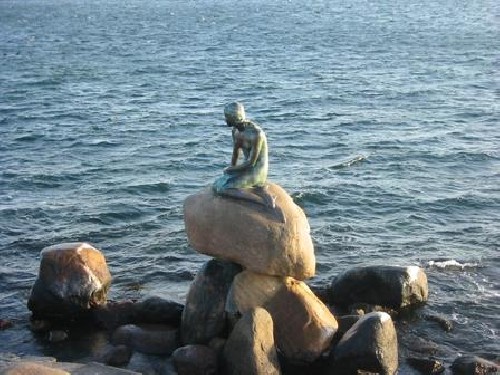
Over the next few days, we saw some of the more traditional tourist attractions including the little mermaid and the marble church. We also tried out more local cuisines and pubs. We spent most of our time on foot, which for a small city such as Copenhagen, was probably the best way to get around. In the end, I was struck by the friendliness of Danish people. Everyone had a smile on their face and was very approachable. It was sad leaving Copenhagen.
- comments