

Profile
Blog
Photos
Videos

- Blog
- Africa
-
Location Date Malawi 
1277247600 South Africa 1262995200 Tanzania 1230768000 -
-
Location Date Sun, 30 May 2010 1275213199 Sat, 13 March 2010 1268465017 Sat, 19 December 2009
1261206313 Fri, 02 October 2009 1254476249 Wed, 03 June 2009 1244013862 Sat, 28 March 2009 1238234338 Sat, 28 February 2009 1235814937

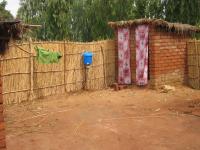
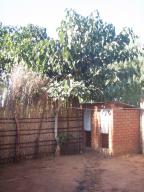
My projects were all stalled.Construction on the henhouse was at a standstill because of a dispute over materials; the oil-pressing equipment I'd ordered was not being allowed through customs in Lilongwe.My counterparts at the health center started skipping my meetings and once, even an important event.I spent all my time pleading and cajoling - but ultimately, everything was outside of my control.Meanwhile, I was trying to reassure those community members who were waiting patiently with me that we would succeed, all the while secretly doubting it.
After Camp GLOW was over, I knew it was time to focus 100% on pushing my projects forward in the village.I knew, too, that the biggest challenge was going to be completing the henhouse or "khola" with my AIDS support group.
I thought things were off to a good start when the Member of Parliament (MP) for our district visited the work site and offered to donate iron sheets for the roof left over from another building project.That very day, I drove with her to the police station, where the iron sheets were being stored.The MP summoned all the local officials in the area, introduced me, and instructed them to turn the iron sheets over to me as soon as we reached that stage in building.
This is not what happened.
When we were ready to build the roof, I called the Paramount Chief, known as the Traditional Authority or "TA" - sort of like a provincial governor - who had promised to transport the iron sheets to my village in his truck.He failed to show up at the appointed time, so I called him again.Again, he promised to come.This continued for a month.Finally, recognizing the situation as the typical Malawian way of backing out without confrontation, I called one last time and told him I would transport the iron sheets myself if he would release them to me.The TA agreed, but said he needed to give me a letter to pass on to his deputy, authorizing his permission.
So I biked to his house one morning - an experience in and of itself.One of his four wives offered me tea, while he joked that I ought to join the party and become his fifth.The TA proceeded to dictate the letter to his wife, who dutifully wrote down his every word and stamped it with his signature.
I went directly to the home of his deputy, the Senior Group Village Headman (GVH).After reading it, the GVH announced he wanted to hear from the MP herself.I arranged the phone call, but the GVH was ready with another excuse:the iron sheets were being guarded by the police, who, in turn, were being held accountable by the Zomba District Office of Land Use.
We went around like this for three months, each level of authority deferring to another level of authority.I couldn't understand; the Paramount Chief, GVH, and the police had all been present when the MP promised me the iron sheets.Why did I need further permission?I finally discovered that the GVH and the headmen of individual villages had secretly been selling the iron sheets, and thus did not want them turned over to me.
I decided to stage a coup, and just take the iron sheets.I biked over to the police station and announced to the police that I was coming back that afternoon with transport.
I wish I'd had my camera with me when I showed up after lunch.There, sitting in front of the iron sheets - literally blocking my way - sat all the headmen and the police.They told me I couldn't have the iron sheets, that I was an "azungu" and therefore rich and ought to pay money for them.
Though I hadn't wished to involve her further, I felt forced to call the MP and explain the situation.I begged her to set things right.Did she ever!
Honorable MP Mrs. Annie Lemani showed up, unannounced, at the GVH's home.He was working in his field, but she made him get in her car and accompany her to the police station anyway.She also summoned the other headmen, and we all sat in a circle under a tree next to the iron sheets.In Chichewa, Mrs. Lemani made a speech about my work in the community, and how she was supporting it by giving me the iron sheets.Then she asked each man, one by one, looking them in the eye as she spoke: "Were you not there when I gave them to her?Weren't you?Weren't you?"They literally hung their chins in shame and muttered that yes, they had been.Mrs. Lemani turned to me dismissively and said, "Your issue has been solved."
I immediately called the bike taxi guys, who I'd told to be ready and waiting.Within minutes, they were there, loading the 15-feet sheets onto their bicycles, 10 at a time.I thanked Mrs. Lemani, and she left.The chiefs lingered a bit, watching.I had to laugh when one of them asked me "Musangalala tsopano?" (Are you happy now?)
"Yes," I replied."Ndikusangalala ko bas." (I'm very happy.)
After this incident, many villagers - including my village chief - came to me to apologize for the corruption of their local officials, saying how shameful it was.I told them politicians are the same way in America - it's easy to abuse the spoils of office.
I thought about this further, reflecting on the whole month and on all the challenges I'd faced, on the people who let me down, but also on the relative success of continuing to move forward, inch by inch - and the people who never gave up on me or our projects.
What I'm discovering is that people's actions speak louder than their culture.In general, a society can definitely be typified by behavioral patterns.Malawi, for instance, calls itself the "Warm Heart of Africa," and it's hard to argue that this aphorism is not true.When I need directions, people here don't just shrug or point.A Malawian will walk me there and introduce me to the shop owner.My neighbors have so little - and yet for two years, they've brought me whatever produce are in season - beans, maize, mangos, and potatoes.This is culturally correct for them, and they are strict disciples.Yet their personalities can manifest themselves very differently, like people anywhere else in the world.But no one person is representative of everyone in Malawi, or even everyone in my village.
My mistake this past fall was in believing that my whole community either had to be for me, or against me - even tacitly, by not participating in my projects.But there will always be people who are resistant to me, or indifferent, or incredibly patient, supportive, and inspiring.
The youth group I'm trying to make cooking oil with, for instance, is lead by this wonderful man named Charles.We have been waiting several months for the post office to release the oil press, but Charles never gets discouraged.He just tells me how happy he is that his organization is going to have the means to generate their own income and help girls in the community pay their school fees.
Charles has this unique way of adapting English phrases to express his meaning.Often, I find his interpretations much more poignant, more applicable to the situation at hand in Malawi.Referring to the oil project, he said:"Give a child a fish, and he will eat it.Teach a child to fish, and when his parents die, he will know where to find a fish."
The world over, there are generous people, selfish people, kind people, mean people.There are hard workers, and those with different priorities.Sometimes, you have to know when to walk away.The valuable lesson for me in all this has been to identify community leaders, people with the same objectives, people that are committed - and not to give up on them, as they refused to give up on me.
I continue to absorb lesson after lesson about life, the nature of people and my own spirit.In the words of Charles, my African poet:"Learning is good - it's like watering a tree.To stop learning, is to stop receiving water."
- comments